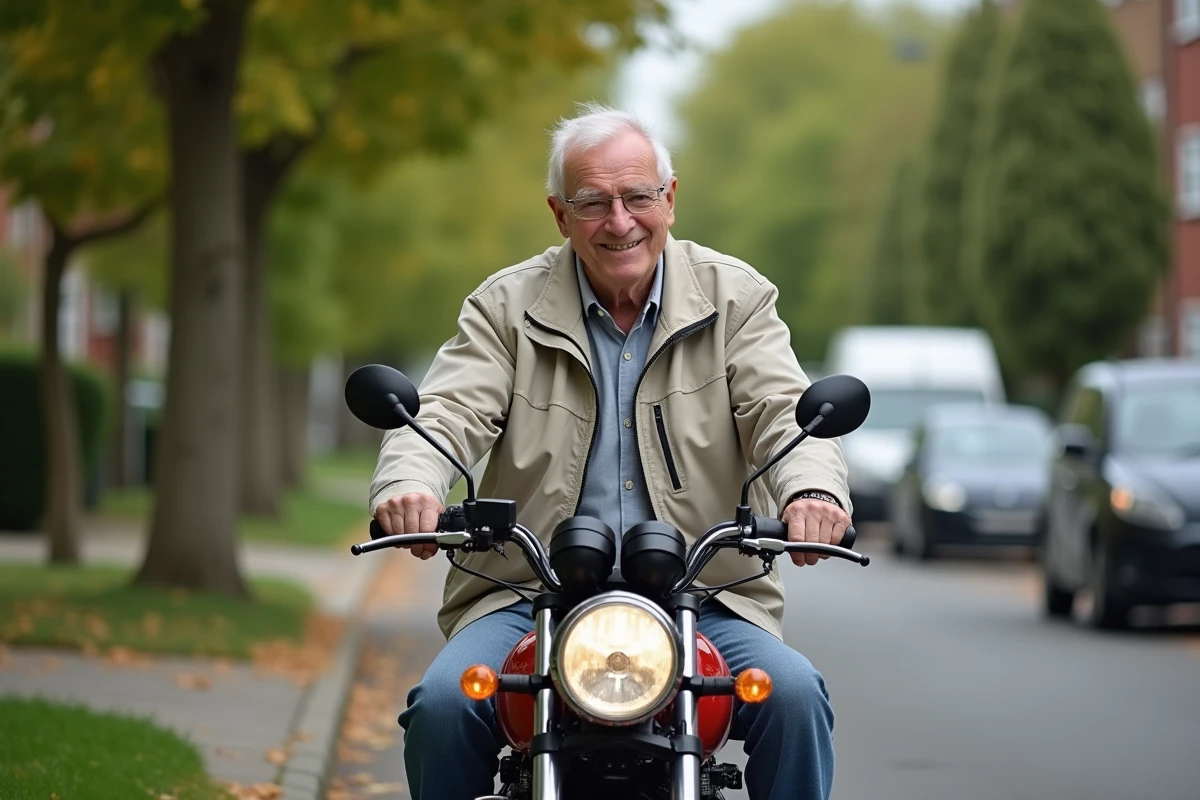
In France, nearly one in five motorcyclists is over 60 years old, according to the latest data from the French Federation of Angry Motorcyclists. The two-wheeler market is gradually adapting to this demographic, but traditional catalogs remain dominated by heavy and powerful models. Many manufacturers maintain ranges dedicated to young urban riders, while the needs of older drivers evolve differently. However, some compact and understated models prove to be better suited, despite their low media visibility. The criteria of maneuverability, ergonomics, and electronic assistance take on a whole new significance in the purchasing decision.
Why prioritize a lightweight motorcycle after 70?
As soon as the motorcycle becomes heavy, every maneuver at a stop or low speed becomes much more demanding, especially when you’ve passed 70. It’s no longer about brute strength or the desire for thrills at all costs, but about the comfort of a motorcycle that responds immediately, reassures, and doesn’t tire you out. Because at that age, no one wants to fear a U-turn on gravel or a small reverse in a parking lot.
Lightness thus emerges as an unexpected ally. It allows for true ease at the handlebars, fostering serenity in heavy traffic or during frequent stops. A lower center of gravity and a compact size: that’s what restores confidence. Some seniors continue to travel the country in pairs. Others prefer the comfort of a low seat and the simplicity of use in the city. Regardless of the profile, the right choice leans towards an accessible motorcycle that reduces fatigue and invites pleasure, without stress or apprehension.
On models designed for older riders, everything is considered: braking aids, better ergonomics down to the details of the controls, a welcoming seat, electronics that know how to be forgotten… It’s no longer power that attracts, but mastery. Before buying, it’s better to step off the beaten path and gather concrete information. A comprehensive file on which lightweight motorcycle for seniors helps clarify and identify the model that will allow enjoying the road for as long as desired.
Statistics confirm it: remaining a motorcyclist after 70 is not impossible, provided the machine is perfectly suited to one’s abilities. It requires thinking differently: balance, ergonomics, and assistance technologies are priorities. An impulsive crush can quickly turn into a constraint. At this age, the choice must align with the pilot’s reality, not just flatter the eye.
Essential criteria for a choice suited to seniors’ needs
To determine the ideal motorcycle after 70, it’s best to start with an honest inventory of one’s needs and current condition. The first criterion: the weight of the two-wheeler. A lightweight, well-balanced model provides immediate reassurance. Next, the seat height: being able to place both feet on the ground at a stop is inseparable from the feeling of safety, especially in the city.
Several characteristics deserve to be reviewed at the time of choice:
- Adjustable suspensions: they provide flexibility and comfort, whether riding alone or with a passenger, regardless of the load.
- ABS braking and traction control: no longer relying solely on one’s experience in emergency situations, these devices provide valuable assistance and minimize the risk of falls.
- Sitting comfort and ergonomic controls: to limit fatigue and enjoy long journeys.
Several styles of motorcycles meet these points: the road trail, synonymous with versatility and comfort; the roadster, which ensures maneuverability and lightness; the maxiscooter, unbeatable in ease of use; not to mention certain touring bikes suited for the road and passengers. Depending on needs, prioritizing a high windscreen, saddlebags, or a top case will enhance practicality for traveling or transporting belongings effortlessly.
At this stage of life, it’s no longer about impressing or following trends: it’s about having a motorcycle designed to facilitate every maneuver, limit constraints, and provide enough protection and equipment to turn every ride into lasting pleasure. The best machines combine accessibility, safety, and modularity while preserving the taste for freedom.
Comfort and safety: how to enjoy the road at any age
The mechanics alone aren’t everything. Remaining a motorcyclist after 70 also means investing in comfort and safety. Regular visits to a healthcare professional are essential: eye, hearing, and coordination checks. Sometimes, just a slight imbalance can make a ride perilous.
The equipment must meet the same standards: a carefully chosen approved helmet, certified gloves, protective high boots, reinforced clothing whenever the journey calls for it. For suitable motorcycles, a generous seat and good aerodynamic protection are crucial, especially when outings extend.
Practice also evolves. Short sessions in a club or driving school can help revive good reflexes, acquire new tips, or get accustomed to new electronic assistance. Insurance should provide guarantees tailored to the senior profile, with flexible options for experienced riders.
Maintenance allows for no improvisation: monitoring the condition of brakes, tires, lighting, and suspension adjustments avoids many issues. For two-up riding, opting for a motorcycle with a wide seat and an effective windscreen significantly improves comfort over all distances.
Continuing to travel the roads serenely after 70 is not turning one’s back on passion. On the contrary, it’s about prolonging that pleasure, without betraying oneself, with the satisfaction of remaining in control of the pace and the path, regardless of age or the number of kilometers on the clock.