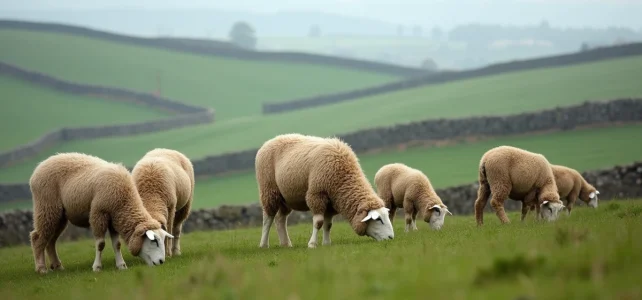
The Exlana sheep does not resemble the typical sheep breeds found in French pastures. Its most visible characteristic can be summed up in one sentence: it sheds its fleece on its own, without human intervention. This natural shedding, referred to as “shedding” in Anglo-Saxon terminology, radically changes the way a sheep flock is managed. Developed in the United Kingdom, the Exlana is now attracting the attention of breeders looking for extensive systems that are less labor-intensive.
Exlana Sheep and Shedding: Why the Fleece Falls Off Naturally
You may have noticed that a dog sheds in the spring and loses its winter coat? The principle is similar with the Exlana. Wool grows during the cold season and then gradually detaches as the days get longer. The fibers fall off in patches, revealing a short and smooth coat underneath.
This mechanism is the result of selective breeding conducted over several generations, crossing Wiltshire Horn, Romney, and Lleyn lines. The breeders’ goal was to produce a sheep known as a “bare shedder,” meaning an animal whose shed is complete, with no residual fleece clinging to its back or sides.
In practical terms, this eliminates shearing. In a traditional farm, shearing requires skilled personnel, equipment, and time. The breeder must gather the flock, contain each animal, and then store and dispose of the wool, the market value of which rarely covers the cost of the operation. To learn more about the Exlana sheep breed on Animal News, the details of this characteristic are well documented there.
Resistance to Parasites: A Concrete Health Benefit for Sheep Farming
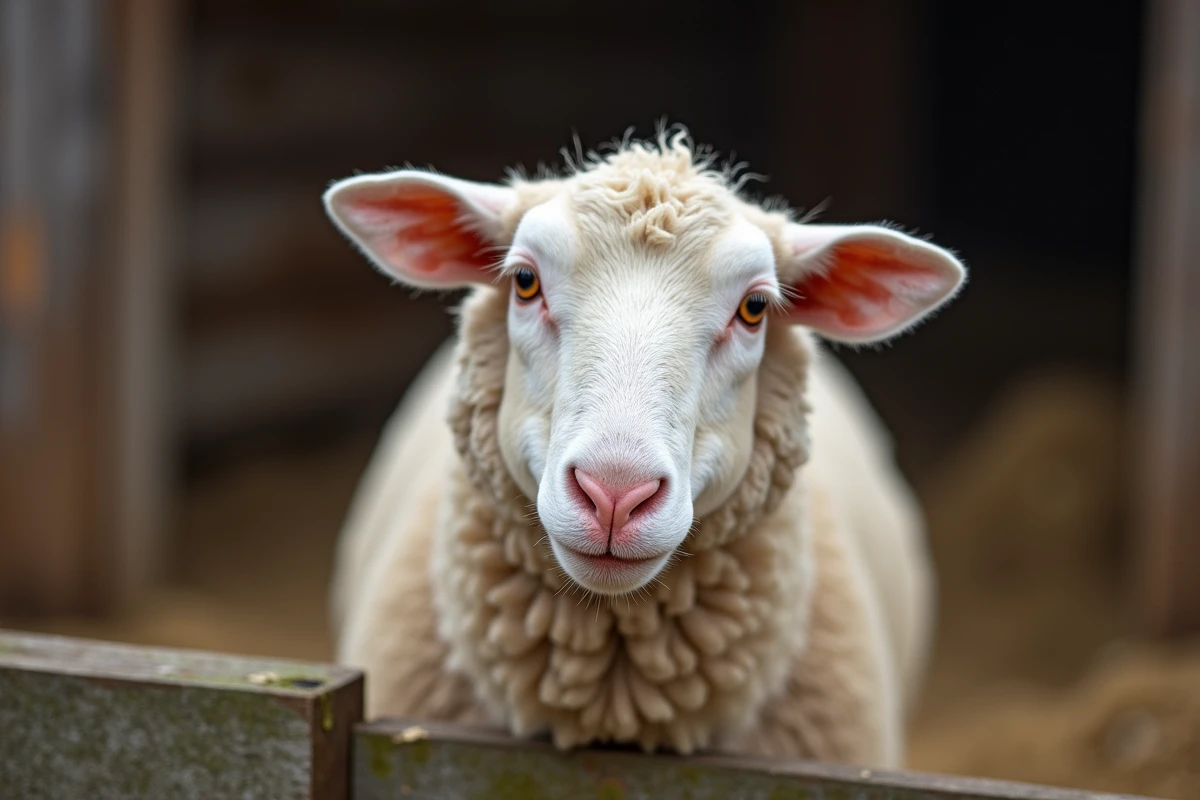
The natural shedding of the Exlana has a direct consequence on parasite pressure. A dense fleece retains moisture and creates a favorable environment for flies (myiasis) and lice. Without this permanent fleece, ectoparasites find fewer refuges on the animal.
Since 2023, several pilot farms in Cornwall and Devon have noted a marked decrease in the use of ectoparasiticides on their selected “bare shedder” Exlana flocks. Treatment is no longer systematically applied to the entire flock but only targeted, after counting flies or lice on the affected animals.
This shift from preventive treatment to targeted curative treatment changes the economic and health equation:
- Fewer chemicals purchased and administered, reducing the cost per ewe over an entire season
- A lower risk of developing resistance in parasites, a growing problem with traditional anthelmintics
- Reduced handling time, as the breeder no longer needs to treat the entire lot at each visit
In comparison, for Mule or Texel crossbred lots managed under the same conditions, systematic treatment remains the norm.
Composite Breed in Development: What the Status of Exlana Means
Why refer to a “breed in development” rather than a recognized breed? Because the Exlana does not fit into the national genetic improvement schemes of the United Kingdom. It is classified among the “composite shedding breeds”, a group of recent breeds resulting from directed crossings, managed outside the programs reserved for heritage breeds.
The Exlana Sheep Breed Society maintains a private herdbook and uses its own selection indexes. This operation outside the Rare Breeds Survival Trust or official organizations has practical consequences for a breeder:
- Genetic traceability relies on the data from the breed society, not on a centralized national registry
- Breeding stock is not evaluated according to the same criteria as breeds registered in national programs
- Access to certain subsidies or official agricultural competitions may be limited depending on the country
In France, the registration of the Exlana and access to CAP subsidies remain an open issue. The regulatory framework is not yet stabilized for this breed, which hinders its adoption by breeders who depend on these systems.
Extensive Grazing and Body Condition Maintenance: Field Performance
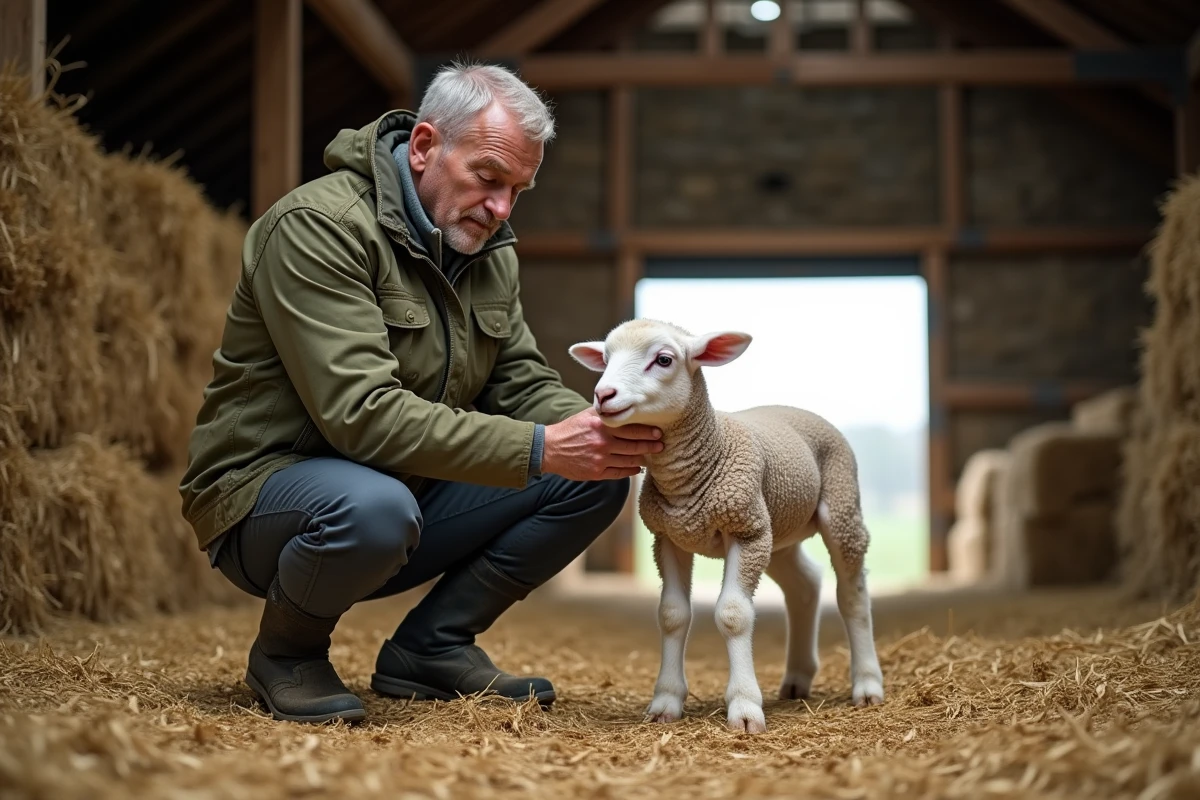
A sheep can be rustic on paper and physically collapse at the end of the grazing season. This is why maintaining body condition score (a rating given by palpating the animal’s lumbar area) is as important as the shedding ability.
Trials conducted in New Zealand, reported in the British agricultural press, show that Exlana lines from Wiltshire Horn, Romney, and Lleyn crossings maintain their body condition at the end of the season better than Texel and Mule crosses under equivalent extensive grazing conditions. In wet areas with high parasite loads, this ability to remain in good condition without concentrated supplementation represents a direct economic advantage.
For eco-grazing systems or farms in marginal areas (heathlands, degraded meadows, fallow land), the Exlana presents a suitable profile. The ewe makes use of poor vegetation covers without losing too much condition, and the lambs from these systems reach an acceptable sale weight in a reasonable time.
Absence of Marketable Wool: A Choice Embraced by Breeders
A sheep without fleece is also a sheep that does not produce sellable wool. For a breeder used to considering wool as a by-product (even marginal), transitioning to the Exlana requires a change in mindset. The animal is selected for meat and hardiness, not for fiber.
This choice makes sense when one knows that the wool from many meat breeds is currently sold at a price that does not even cover shearing and packaging costs. The Exlana eliminates this loss-making item and focuses value on the carcass and on reducing farming costs.
The Exlana is not a miracle sheep, but a targeted response to real constraints: shearing costs, parasite pressure, need for hardiness in extensive systems. Its diffusion remains limited by its status as a developing breed and by the lack of an official framework in several countries. Breeders interested in it would benefit from closely following the results of British pilot farms before committing.