The sofa is much more than just a piece of furniture in our daily lives. It tells the story of our homes, welcomes our moments of relaxation, and the conversations shared with our loved ones. Evolving over time, it has diversified to meet various aesthetic and functional demands. Whether it is a central element in a spacious living room or a carefully chosen piece to fit into a small space, the sofa has managed to reinvent itself to remain a staple of interior design.
Origins and Evolution of the Sofa
Understanding the history of the sofa allows us to better appreciate its importance in our modern lives. This piece of furniture has traversed the ages, evolving with the trends and needs of different eras.
Initially, the first sofas date back to ancient Egypt. Often used by nobles, they symbolized power and social status. The materials were primarily made of carved wood, adorned with cushions for comfort. Over time, the Middle Ages saw the emergence of more rudimentary models, often made of solid wood, to provide a resting space for large families.
The Renaissance marked a decisive turning point with the introduction of more luxurious fabrics and more elaborate styles, influenced by European royal courts. Then, the industrial revolutions led to mass production, making this piece of furniture accessible to a larger number of households.
The Different Styles of Sofas
The sofa today comes in a multitude of styles, each with its own history and distinct characteristics. Each style reflects a particular era, culture, or trend.
- Chesterfield Sofa: Its origin dates back to the Victorian era, recognizable by its tufted leather and rounded arms.
- Scandinavian Sofa: Appreciated for its clean lines and wooden legs, it embodies Nordic simplicity and functionality.
- Convertible Sofa: Valued for its versatility, ideal for small spaces requiring space optimization.
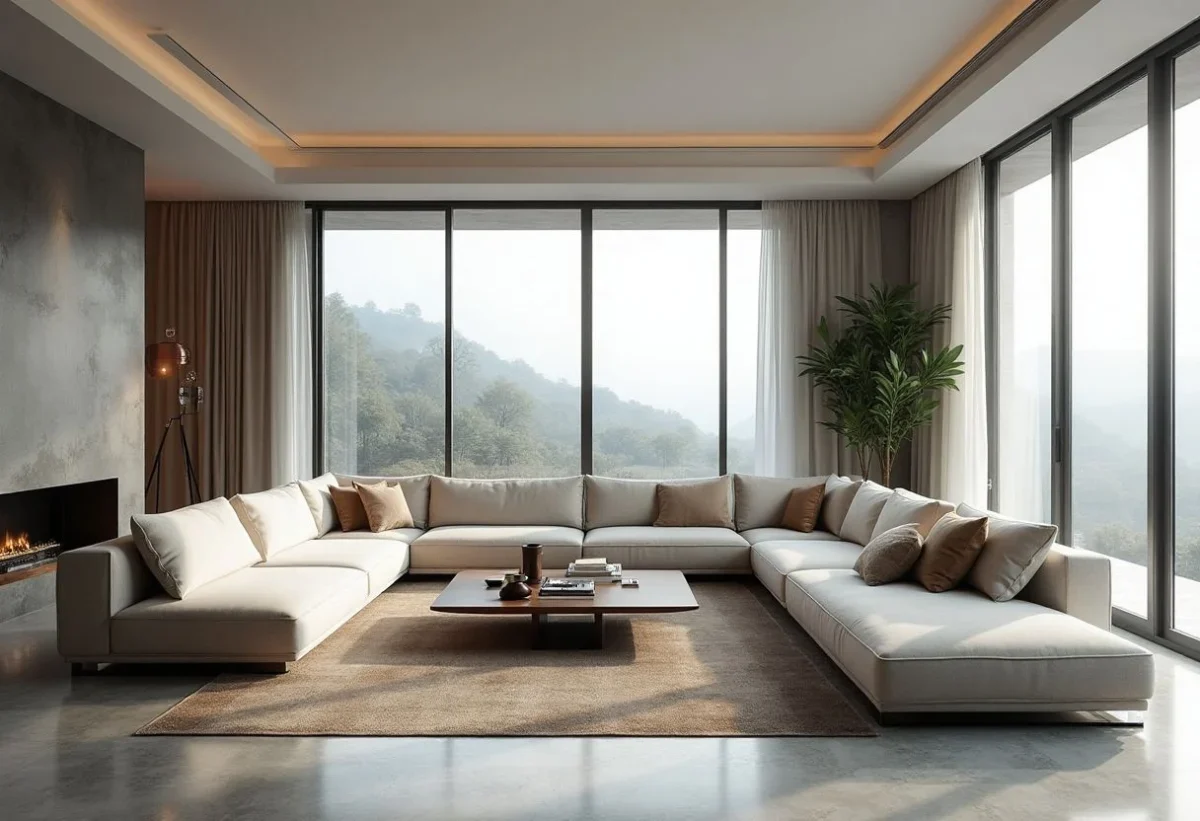
- Corner Sofa: Offering ample seating space, it is perfect for large families and spacious living rooms.
The Role of the Sofa in Interior Design
In the art of interior design, the Sofa plays a determining role. It structures the space, creates meeting areas, and reflects the character of its occupants.
Placing a sofa wisely can completely transform a space. In a living room, it often serves as the focal point and defines the orientation of the rest of the furniture. For small spaces, the trick lies in choosing a compact model that maximizes comfort without cluttering the room.
Accessories like cushions and throws add a personal touch and allow for easy updates to the appearance of the sofa. Colors and patterns should be carefully chosen to create harmony with the rest of the decor.
Materials and Their Impact on Style and Comfort
The choice of materials is essential in determining the style and comfort of a sofa. Whether it’s leather, fabric, or velvet, each material offers its own characteristics.
- For a sophisticated and timeless style, leather is often favored. It ages well and is easy to clean, although it is more expensive.
- Fabric offers a variety of textures and colors, allowing for greater customization. It is often selected for its comfort and warmth.
- Velvet, appreciated for its softness, adds a luxurious and elegant touch, although it is more delicate to maintain.
Choosing the right material involves considering daily use, the presence of pets or children, and the atmosphere one wishes to create.