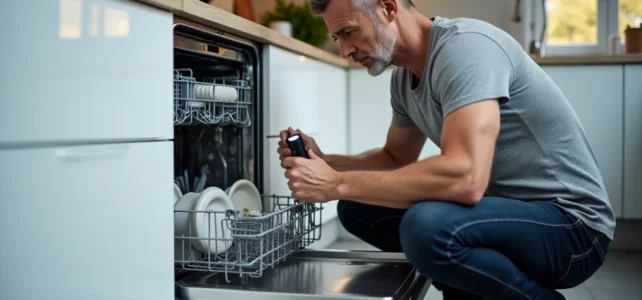
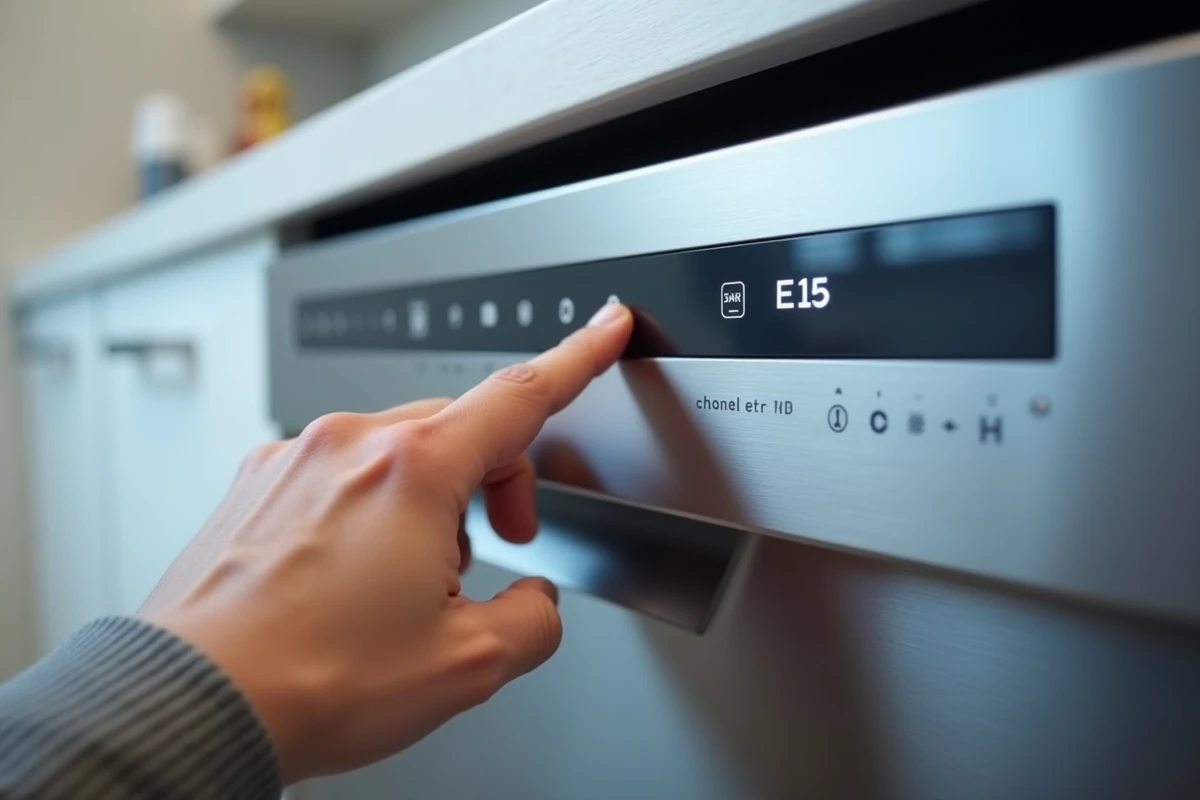
The error code E15 on a Bosch dishwasher indicates a safety lock of the anti-leak system: water is pooling in the base of the appliance. The challenge lies in the fact that this error does not behave like a simple software bug. An electrical reset does not resolve anything as long as the physical cause persists. Understanding what distinguishes each triggering scenario helps avoid unnecessary intervention, or worse, a quick recurrence.
Differentiated Diagnosis: Why the E15 Code Doesn’t Always Clear
The most common confusion is treating the E15 as a software error. Unplugging the appliance, waiting a few minutes, and plugging it back in: this sequence only works if the water has already been drained from the base.
The E15 is a physical safety lock, not just a code to reset. The sensor located in the drip tray detects the presence of water and maintains the lock as long as the level has not dropped. As long as the float remains in the high position, the appliance refuses to restart, and it may even become difficult to turn off.
To properly diagnose the situation, it is necessary to distinguish three scenarios that do not require the same treatment. The table below summarizes the most common cases and the appropriate response for each.
| Scenario | Observable Sign | Priority Action |
|---|---|---|
| Visible leak under the appliance | Water on the floor, signs of moisture around the base | Shut off the water supply, tilt the appliance to drain the tray, identify the faulty part |
| Internal leak without external trace | No visible water, but the code persists after tilting | Remove the side panels, inspect the internal connections and the tub seal |
| Foam accumulation in the base | Foamy residue in the drip tray, history of using regular dish soap | Clean the tray, rinse the base, use only dishwasher detergent |
The second scenario is the one that often traps users. A microscopic leak can fill the base without leaving a trace on the floor. Water accumulates drop by drop over several cycles, and the sensor eventually triggers the protection. A superficial check then gives the impression that the appliance is malfunctioning for no reason.
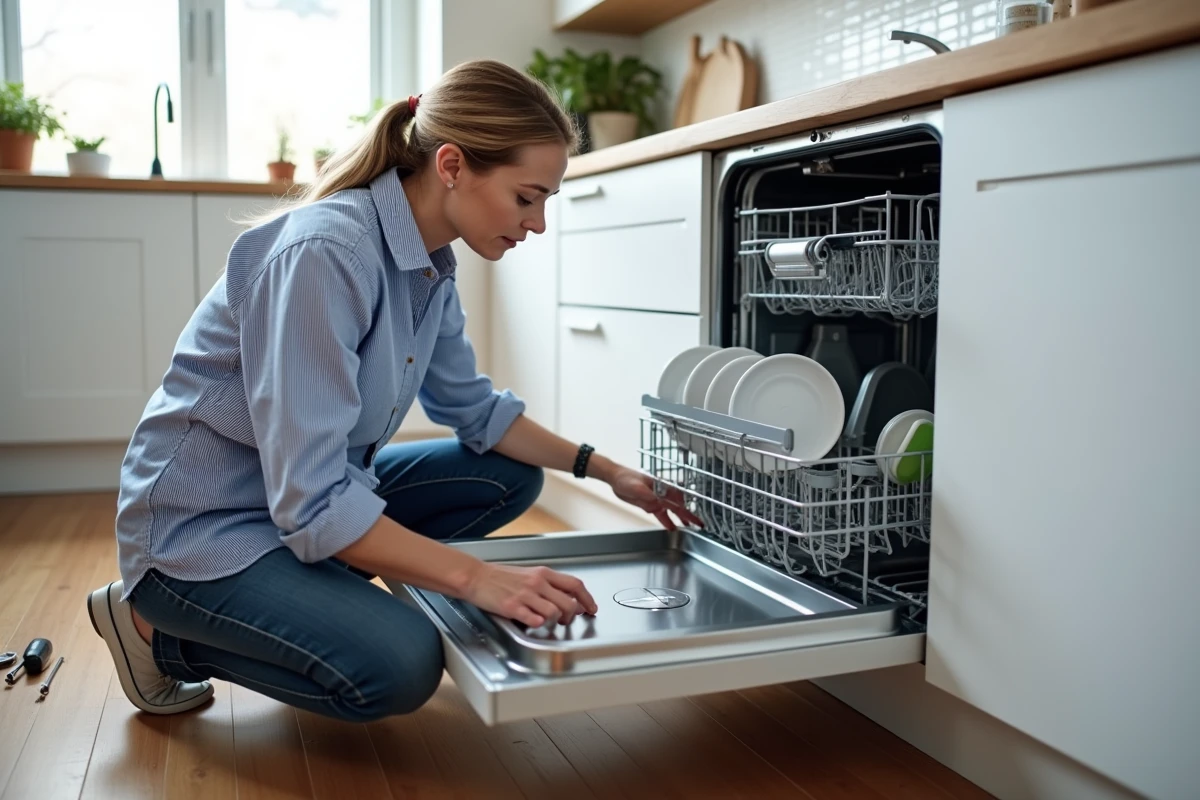
A detailed guide allows you to resolve the E15 error code on a Bosch dishwasher by following a methodical procedure tailored to each situation.
Indirect Causes of the E15 Error Code Often Overlooked
Troubleshooting articles generally focus on hose leaks or worn door seals. These causes exist, but several indirect triggers go unnoticed.
- An excess of product or the use of hand dish soap generates abundant foam that overflows from the washing circuit and trickles down to the base. The problem can develop gradually over several weeks.
- A tub seal clogged with limescale or greasy deposits intermittently loses its tightness. Water only leaks when the level rises during certain phases of the cycle, making the fault difficult to reproduce during a quick test.
- A partially obstructed or aging Aquastop hose may allow a seepage at the connection with the inlet valve, especially if the tightening has shifted after moving the appliance.
The common point of these causes: none produce a clear leak. The diagnosis requires removing the base and examining the state of the drip tray after a complete cycle, not just when cold.
The Trap of Post-Failure Handling
When the E15 appears, the natural reaction is to press all the buttons, open the door, or attempt a short program. These actions can worsen the situation. Opening the door while the drain pump is running sometimes in safety mode risks causing additional overflow.
Cutting off the power supply and closing the water valve remains the first reflex to adopt. Any attempt to restart before draining the base prolongs the blockage and may cause the drain pump to run dry, which wears it out prematurely.
Procedure for Draining the Base and Checking the Anti-Leak Sensor
Tilting the appliance backward (about 45 degrees) allows stagnant water to flow forward and be collected with towels or a flat tray. This operation requires two people to avoid destabilizing a built-in appliance.
Once the base is drained, the float of the anti-leak sensor should drop freely. If the float remains stuck in the high position despite the absence of water, a deposit of limescale or food residue is preventing its return. Cleaning the float with a damp cloth is sufficient in most cases.
Check the Drain Pump and Drainage Circuit
After draining the base, starting a short cycle allows you to confirm that the error is resolved. If the E15 reappears in the following minutes, the leak is still active. In this case, you need to methodically inspect the following points:
- The connections of the hose between the tub and the drain pump, looking for white limescale traces that indicate an old seepage.
- The door seal around its entire perimeter, especially in the lower corners where deposits accumulate.
- The water inlet hose and its connection to the faucet, especially if the appliance has been recently moved.
- The condition of the drip tray itself, which may have a crack after several years of service.
A test cycle empty, without dishes or detergent, isolates the mechanical leak from a foam-related issue. If the error only returns under real load, the possibility of overdosing or using the wrong product becomes likely again.
When to Call a Technician for a Persistent E15
If the E15 error code returns after two base drainings and an empty test cycle, the fault likely exceeds the scope of a repair without specific tools. A micro-crack in the tub, a faulty Aquastop, or a damaged drain pump require part replacement and full access to the hydraulic circuit.
Bosch and Siemens models share a similar base architecture. The parts and diagnostic logic are often interchangeable between these two brands. This technical proximity facilitates the search for compatible spare parts but does not exempt you from checking the exact model reference before any order.
The E15 code remains one of the most common on Bosch dishwashers. Its resolution always follows the same principle: remove the water from the base before any reset attempt, then methodically trace back to the source of the leak. Ignoring this sequence leads to repeated breakdowns and accelerated wear of the drain pump.