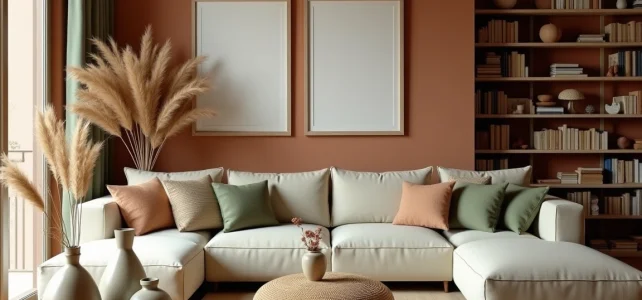
The 2024 decor trends are based on a structuring principle: emotional zoning through color. Major paint brands (Benjamin Moore, Dulux, Sherwin-Williams) no longer offer a single color of the year, but complete palettes designed to regulate the atmosphere of a space, room by room. Calm in the bedroom, creative stimulation in the office, focus in the living room: color becomes a functional tool before being an aesthetic choice.
Color zoning and emotional palettes in interior decoration
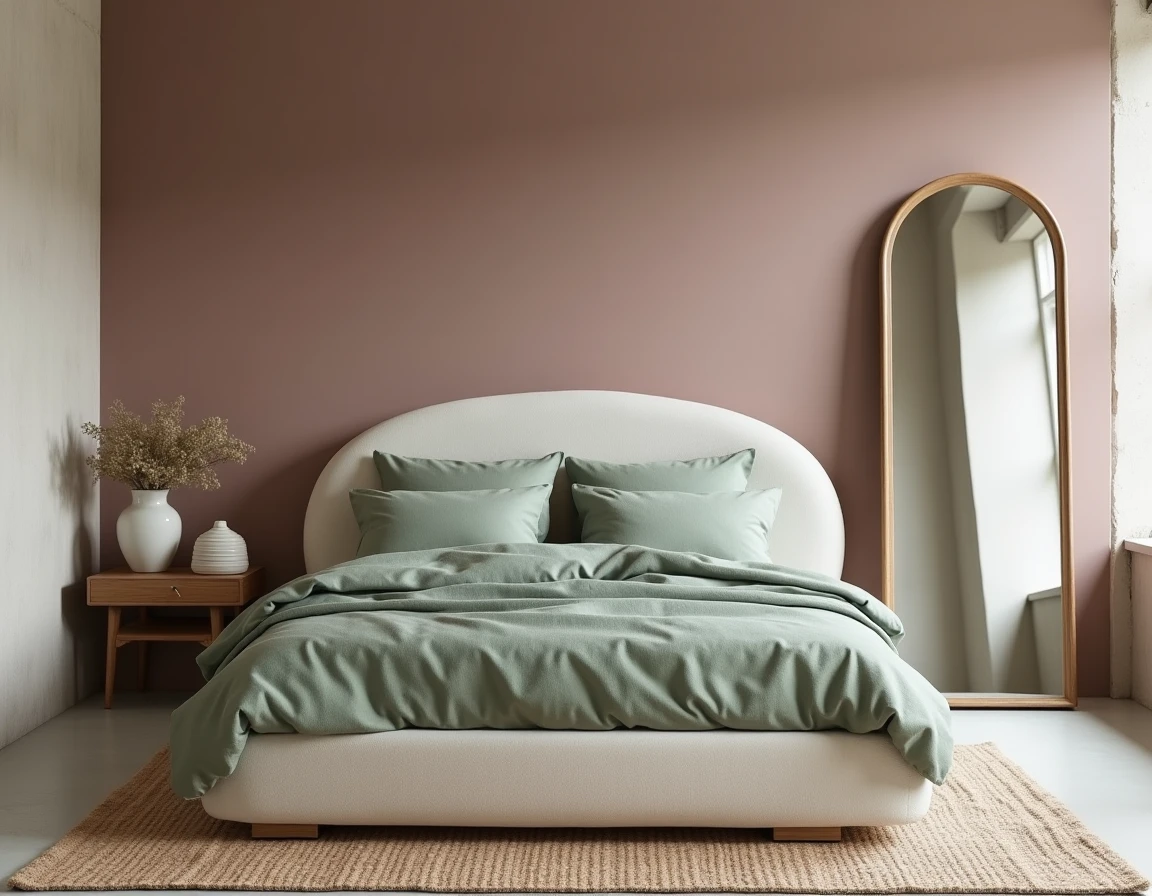
Color zoning involves assigning a specific palette to each living area according to its use. A reading nook treated in muted green does not serve the same function as a bright terracotta entry wall. This approach, presented at the Color Marketing Group conferences in 2023-2024, now structures the collections of manufacturers.
In practical terms, this changes the way paint is purchased. Instead of choosing an isolated color from a swatch, one selects a system of coordinated shades. Three to five colors designed together, with calibrated saturation and brightness values to coexist in the same interior without creating visual breaks.
To explore decor trends with iDéco Maison, this coherent palette logic offers a more reliable starting point than a trendy color applied randomly on an accent wall.
Terracotta colors, muted greens, and sandy beiges: the continuity of indoor and outdoor
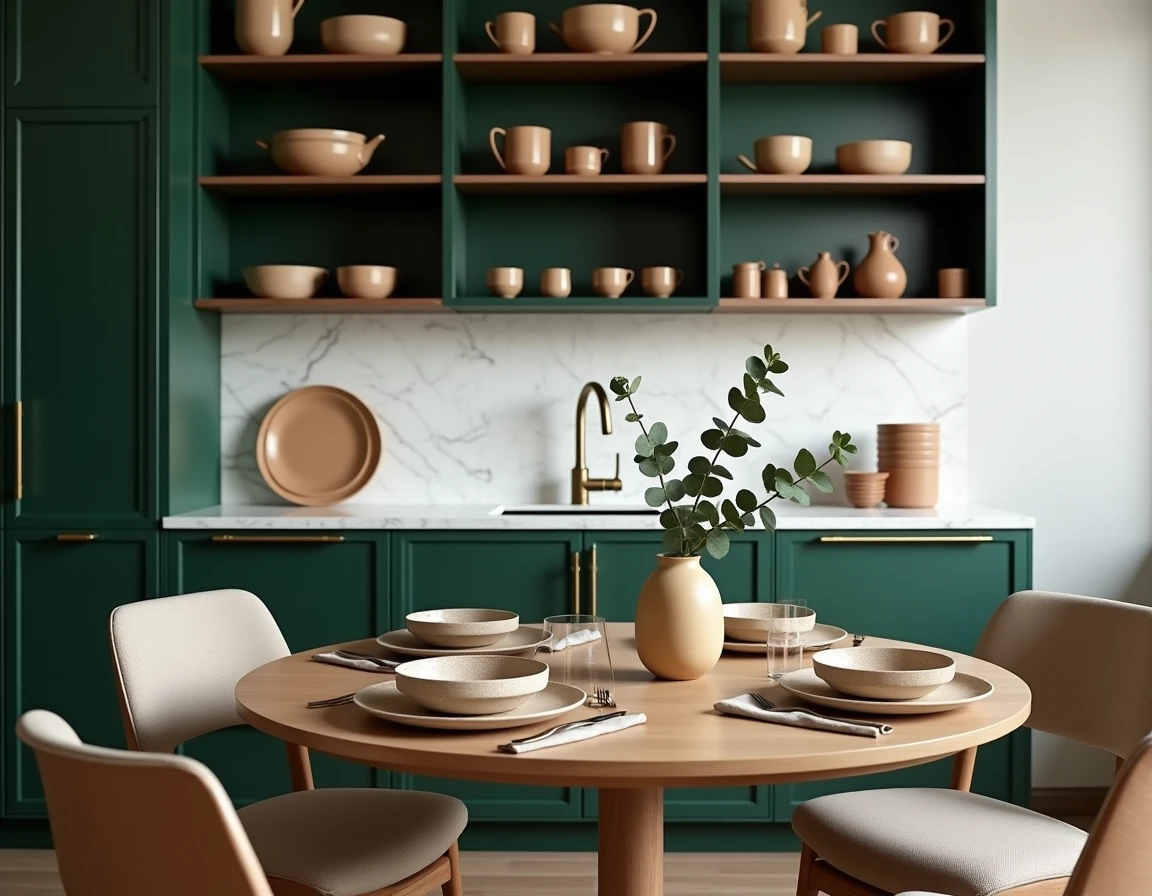
Since 2024, several tile and paint manufacturers have launched specific “in & out” ranges. The principle: the same shades and materials extend from the living room to the terrace. The International Federation of Landscape Architects (IFLA) speaks of “indoor-outdoor blur,” a deliberate blurring of the boundary between inside and outside.
The colors that embody this trend are precise. Terracotta, muted greens, sandy beiges, and micro-cements dominate. Their common point: moderate saturation, inspired by natural pigments, which works well under artificial lighting as well as in daylight.
This choice has a technical consequence often overlooked. A tile intended for outdoor use must meet anti-slip standards that the same color in an indoor version does not. The “in & out” lines solve this problem by offering two distinct finishes for an identical visual.
- Matte terracotta for the living room, structured anti-slip terracotta for the terrace
- Smooth micro-cement indoors, draining micro-cement outdoors
- Washable green paint indoors, stain in the same tone for balcony woodwork
Technical finishes of paints and wall coverings
The reports from Maison&Objet 2024 and the trend books from Architect@Work highlight a less visible but decisive evolution: anti-mark, washable, and antibacterial finishes are becoming a selection criterion on par with color.
This technical upgrade responds to concrete uses. Shared interiors (co-living, short-term rentals, families with children) experience demands that classic decorative paints handle poorly. A high-end matte paint that marks with the slightest friction loses its aesthetic value in a few months.
Manufacturers respond with formulations that maintain the velvety appearance of a matte finish while resisting cleaning. The visual result no longer betrays the level of technicality of the product. An olive green wall can be as durable as a kitchen covering without having a plastic appearance.
Artisanal materials and textures in interior design
The Salone del Mobile 2024 confirmed a trend that has been gaining ground for two years: the return of visibly transformed materials. Raw wood with visible knots, hand-glazed ceramics, irregular weaves. Industrial perfection is giving way to pieces where the trace of the manufacturing process remains legible.
This movement is distinct from the decorative “handmade” trend of previous years due to its technical grounding. The artisanal materials selected in 2024 are not chosen solely for their rustic appearance. Their durability, ability to patina over time, and compatibility with natural shades (terracotta, beige, coffee brown) contribute to the overall coherence of the decor.
- Artisanal ceramic as a kitchen backsplash: each tile shows slight variations in shade that mask daily wear
- Crumpled linen on seats and curtains: a textile that gains character over time instead of degrading
- Unvarnished solid wood on living room furniture: natural patina replaces chemical surface treatment
The challenge is not to multiply textures in the same space but to associate them with the color palette chosen during the initial zoning. A sandy beige micro-cement wall, a raw wood piece of furniture, and a greige linen textile form a set where each material enriches the others without competing.
Thus, the most structuring decor trend of 2024 is not a color or a style, but a method. Coordinated emotional palette, continuity of shades between indoor and outdoor, invisible technical finishes, materials that age well: these four axes share the same logic of durability in decor over time.