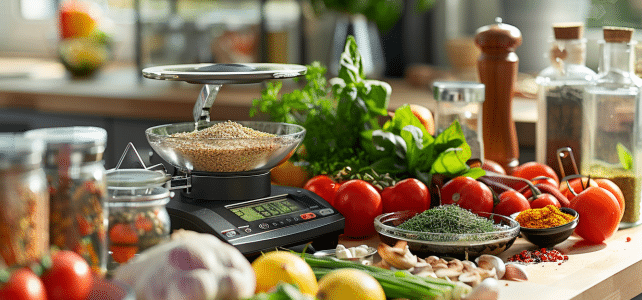
Maintaining a balanced diet can seem like a challenge, especially when it comes to determining the right portions. Too often, we rely on visual estimates that can be misleading. Accuracy in measuring food is essential for maintaining good health and a stable weight.
Measuring tools, such as kitchen scales and measuring cups, are valuable allies for anyone looking to closely monitor their caloric intake. By understanding the recommended portions, it becomes easier to plan meals and avoid excesses. A methodical approach allows you to savor every bite with peace of mind.
What is a food portion and why is it important?
The concept of food portion is central in the field of nutrition. A portion represents the specific amount of food consumed during a meal. But why is it so fundamental to measure these portions accurately? The National Nutrition Health Program (PNNS), through its ‘eat and move’ initiative, promotes a nutritional rebalancing that respects hunger and satiation, without counting calories.
The PNNS aims to improve our health and reduce the risk of diseases. Respecting food portions helps maintain a stable weight and prevent eating disorders. These disorders can affect the perception of hunger and satiation, making portion management even more essential.
How to determine the right portions?
The question of how many grams of pasta per person is recurring. Generally, 60 to 80 grams of dry pasta per person is an adequate portion. Here are some guidelines for other foods:
- 150 grams of cooked vegetables
- 100 to 150 grams of meat or fish
- 1 tablespoon of oil
These guidelines help structure meals while respecting individual needs.
Hunger indicates your body’s needs, while satiation signals when you have eaten enough. A nutritional rebalancing allows for healthy, sustainable weight loss without frustration. Weighing or counting calories is counterproductive and ineffective. Well-defined food portions offer a more intuitive and body-respecting approach, fostering a healthy relationship with food.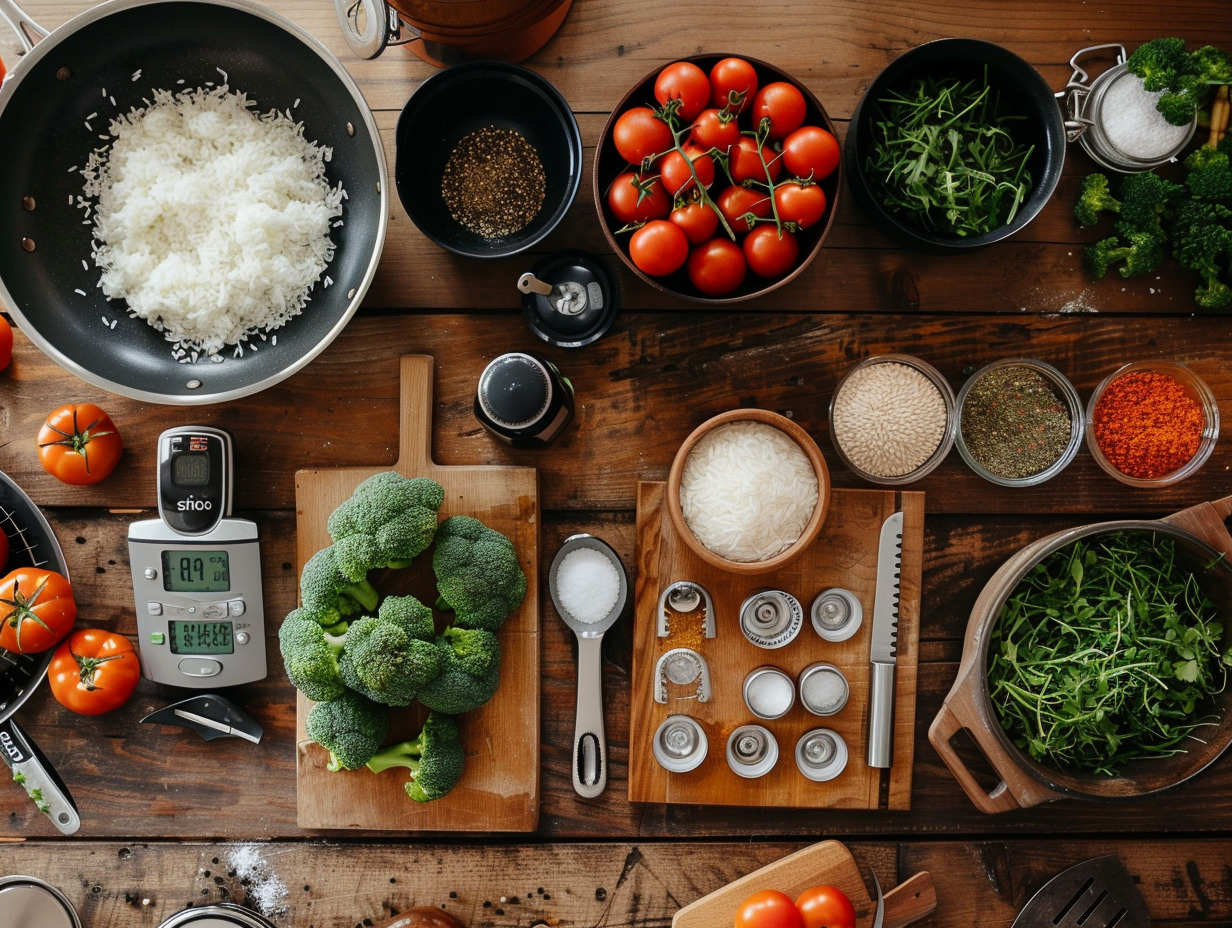
How to measure food portions practically
To measure food portions practically, several techniques can be used. The hand method is particularly effective. For example:
- A portion of cooked vegetables is approximately one cup, or the size of your fist.
- A portion of animal proteins (meat, fish) is equivalent to the palm of your hand.
- For grains (like pasta or rice), a portion is about the size of your closed fist.
- Fats (oil, butter) can be measured with the size of your thumb.
These guidelines allow you to do without a scale while having a precise idea of the quantities consumed.
Using plates to calibrate portions
Another method is to use a plate divided into sections. Here’s how to organize a balanced plate:
| Food | Portion |
|---|---|
| Vegetables | 50% |
| Proteins | 25% |
| Carbohydrates | 25% |
This distribution ensures a balanced nutritional intake. Vegetables should occupy half the plate, with proteins and carbohydrates sharing the rest.
Visual cues
Some foods can be measured using visual cues. For example:
- A medium-sized fruit (apple, orange) is about the size of a tennis ball.
- A portion of cheese is equivalent to the size of a matchbox.
- For liquid dairy products, a portion is equivalent to a standard glass.
These techniques facilitate portion management without requiring specific tools. Adopt these methods for a balanced diet tailored to your needs.